

Quick answer
- Once the cheque and signature are admitted, the court presumes the cheque was given for a debt (Sections 118 and 139 NI Act). You can rebut this on a “preponderance of probabilities” (Rangappa v. Sri Mohan, 2010).
- Main defences: no legally enforceable debt, the cheque was a security cheque with no debt due when presented, defective or unserved notice, a complaint filed out of time, or a director who was not in charge of the company.
- Punishment can be up to 2 years or a fine up to twice the cheque amount, and the court can order 20% interim compensation (Section 143A).
- The case can be settled at any stage (Section 147). Early settlement usually costs less.
A Section 138 complaint is often filed to pressure the drawer into paying. Many cases are genuine, but many involve disputed loans, misused security cheques or procedural lapses. Here is how the law protects the accused.
What must the complainant prove under Section 138?
- The cheque was issued to discharge a legally enforceable debt or liability
- It was presented within its validity period (three months under RBI rules) and returned unpaid for insufficient funds or because it exceeded the arrangement
- A written demand notice was sent within 30 days of learning of the dishonour
- The drawer did not pay within 15 days of receiving the notice
- The complaint was filed within one month after those 15 days (Section 142)
If any step is missing, the complaint can fail.
How do you rebut the presumption of debt?
The presumption under Sections 118 and 139 is rebuttable. You do not have to prove your case beyond reasonable doubt. You only need to raise a probable defence, through your own evidence or by pointing to gaps in the complainant’s case (Rangappa v. Sri Mohan, (2010) 11 SCC 441). In Basalingappa v. Mudibasappa, (2019) 5 SCC 418, the Supreme Court held that the complainant’s financial capacity to lend the money can be questioned where it is disputed.
What are the common defences?
No legally enforceable debt
The cheque was a gift, the debt was already repaid, or the claim was time-barred when the cheque was issued. A cheque for a debt that cannot be legally recovered does not attract Section 138.
Security cheque
A cheque given only as security can still attract Section 138 if a debt was due when it was presented (Sripati Singh v. State of Jharkhand, 2021). The defence works where no liability had crystallised on the date of presentation, or where the cheque was filled in for an inflated amount.
Notice defects
The notice must be sent within 30 days and must demand the cheque amount. A notice demanding a different or vague sum can be fatal. If you never received the notice, you can still pay within 15 days of receiving the court summons and ask for the case to end (C.C. Alavi Haji v. Palapetty Muhammed, (2007) 6 SCC 555).
Limitation and jurisdiction
A complaint filed before the 15-day period ends, or more than one month after it (without a delay-condonation application), is defective. After the 2015 amendment, the case lies only where the payee’s bank branch is located (Section 142(2)).
Company cheques and directors
Only persons who were in charge of and responsible for the company’s business when the offence was committed are liable (Section 141). Independent and non-executive directors who did not sign the cheque are often discharged (S.M.S. Pharmaceuticals v. Neeta Bhalla, (2005) 8 SCC 89).
Does a cash loan above ₹20,000 make the debt unenforceable?
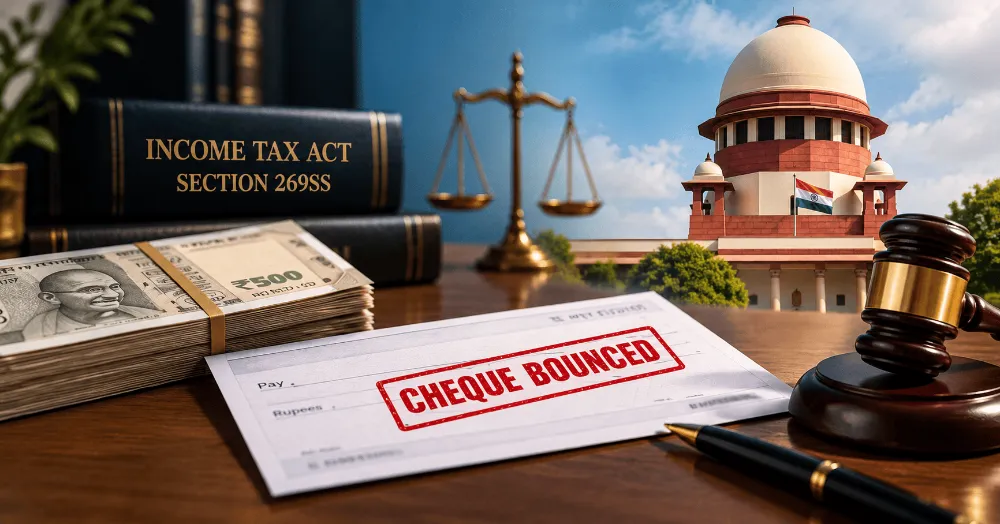
Not automatically. In Sanjabij Tari v. Kishore S. Borcar (2025), the Supreme Court rejected the view that a cash loan in breach of the Income-tax cash limits cannot be recovered through Section 138. Read more in our article on friendly loans and the Supreme Court’s 2025 rules.
What happens if you lose?
The court can impose imprisonment of up to two years, a fine of up to twice the cheque amount, or both. Under Section 143A the trial court can order interim compensation of up to 20%, and on appeal the court can require a deposit of at least 20% of the fine or compensation (Section 148).
Should you settle?
Section 147 makes the offence compoundable. Settling early, especially at the first hearing, saves costs and ends the case. If the debt is genuinely disputed, contest the case and keep your bank records, messages and witnesses ready. Creditors can also read 5 legal ways to recover money.
Need help?
We defend and prosecute cheque bounce cases in the Ghaziabad, Noida and Delhi courts. Speak to our cheque bounce lawyer in Indirapuram, see our criminal law practice, or contact us.
Frequently asked questions
Can I go to jail for a bounced cheque?
Yes, the law allows imprisonment of up to two years, but most cases end in a fine, compensation or settlement. Courts prefer compensation to imprisonment.
Is a security cheque covered by Section 138?
It can be, if a legally enforceable debt was due on the date the cheque was presented. If no debt had become due, that is a valid defence.
What if I never received the legal notice?
You can pay the cheque amount within 15 days of receiving the court summons. Courts treat this as compliance and can close the case.
Can a cheque bounce case be settled?
Yes. The offence is compoundable under Section 147, and the parties can settle at any stage, including in appeal.
Sources
- Negotiable Instruments Act, 1881 — Sections 118, 138, 139, 141, 142, 143A, 147 and 148
- Rangappa v. Sri Mohan, (2010) 11 SCC 441
- Basalingappa v. Mudibasappa, (2019) 5 SCC 418
- Sripati Singh v. State of Jharkhand, 2021 SCC OnLine SC 1002
- C.C. Alavi Haji v. Palapetty Muhammed, (2007) 6 SCC 555
- S.M.S. Pharmaceuticals Ltd. v. Neeta Bhalla, (2005) 8 SCC 89
- Sanjabij Tari v. Kishore S. Borcar, 2025 INSC 1158
This article is general legal information, not legal advice for your specific case. Law and procedure change; please consult an advocate before acting.